Moving cards
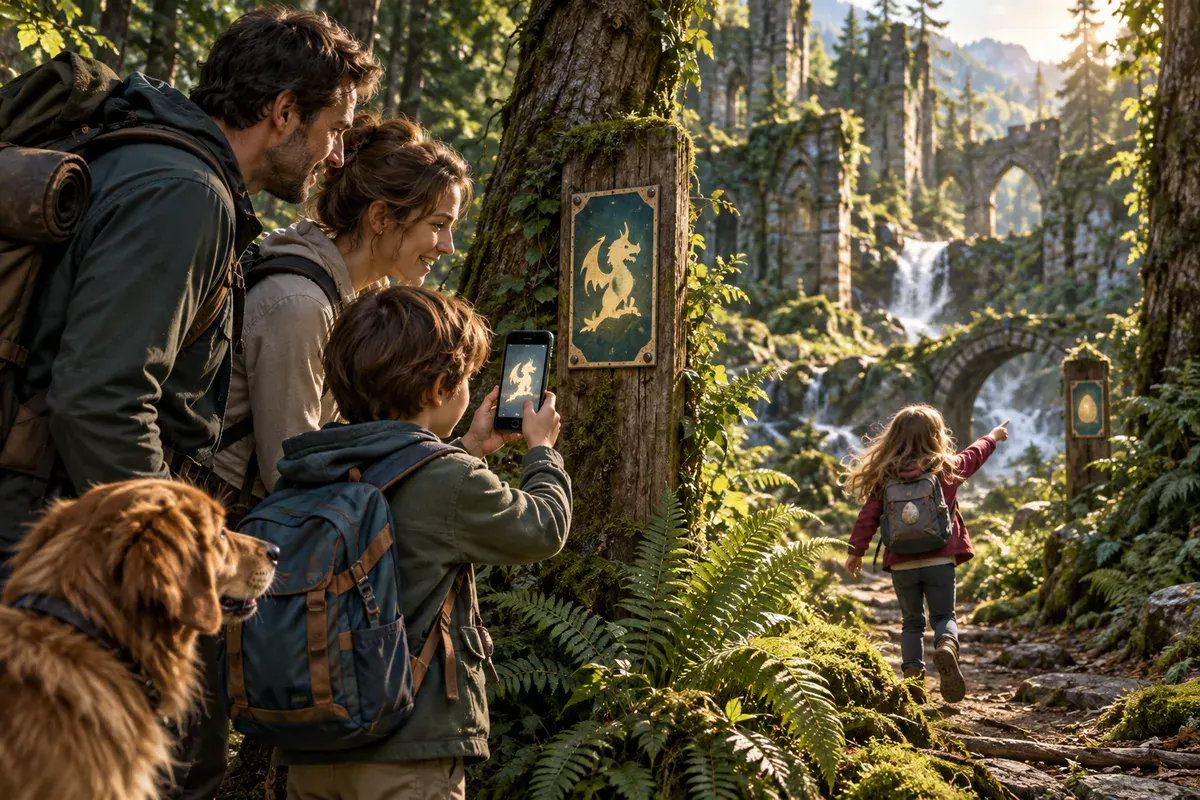
A card can run. On a GPS trail the host gives it more spots and a clock, and the boss a team walked to has moved on by the time it gets there — in order, so the loop can be learned, or at random, so it cannot.

Off until the host says so
Moving cards are off on every trail. A host turns them on for a GPS trail in setup and ticks one box with it: they answer for their players' ages and for every spot a card moves to. Off works at any time, and every card goes home.
At the venue
Players are told before they chase. The map and the trail's instructions say some cards move on a clock, beside the terms every player accepts.
The rule
- GPS trails only. A printed code stays where it is stuck.
- On in setup only — a card's spot is counted from Start, so switching on mid-run would make every card jump at once.
- Eggtrail checks no player's age and no spot. The box records who ticked it and when.
You decide
- The switch on the trail, and the box beside it.
A hiding spot and up to 12 more
A moving card keeps its hiding spot and adds up to 12 escape spots, placed on its own page by tapping the map or standing there.
| Type | Kind |
|---|---|
| Ally | Ally |
| Animal | Collectable |
| Boss | Enemy |
| Creature | Collectable |
| Foot Soldier | Enemy |
| Monster | Enemy |
The card types that may take a route. A host chooses which of those cards run, and where.
At the venue
Each spot carries its own clue in each of the story's languages, so the card's hint points at where it is now.
The rule
- A spot is the host's word that players can reach it safely on foot. Keep a fast route off roads.
- Spots may stand close together, its own or another card's. Only one of a card's spots is ever occupied, and a team inside two circles can open both cards.
- From Start the route is fixed — hiding spot, spots, clock and order. Back to setup unlocks it.
You decide
- Which cards run, and where each one goes.
A clock on every moving pin
A card stays at each spot for the time its host picks — 30 seconds or more in order, 60 or more at random — then moves on. Its pin wears a clock, and the pin's popup and the card's map on the board count down to the second.
At the venue
Tap a moving pin and it says when it moves. When the clock runs out the pin hops; nobody has to reload anything.
The rule
- Every team sees the same card at the same spot at the same moment. The countdown comes from the server, so a phone with the wrong time cannot skew it.
- No spot is stored: where a card stands is worked out from the trail's start and its clock.
- Back to setup sends every card home.
You decide
- The stay at each spot, per card.
Learn the loop, or chase the dice
In order, a card walks its spots and loops back to its hiding spot, so a team that learns the loop can wait at the next one. At random it jumps to any of its spots but the one it is leaving.
At the venue
A rabbit can lap the pond in order, 30 seconds a spot. A boss can turn up at any spot on its list, a few minutes at a time.
The rule
- An ordered loop reaches the phone once, and the pin hops there with no request.
- A random card's next spot never reaches the phone early, so nothing on the page gives it away.
You decide
- Ordered or random, per card.
You have to be where it is
Every action at a moving card checks a fresh fix — accurate to 20 metres, no older than 15 seconds — against where the card stands now. A fight that ends just after it moves still counts where it started, for 120 seconds or half the stay, whichever is shorter.
At the venue
Reach a card that stands still once and you can fight it from anywhere. A moving card asks again every time — that is the chase.
The rule
- The position is whatever the phone reports. It is a deterrent, not a boundary.
- The check uses the trail's own GPS distance, 20 to 100 metres.
- Nothing is stored about where a team stood.
You decide
- The trail's GPS distance, chosen before Start.
A trail with a runner reads Hard
A trail's difficulty is its story's estimate plus its moving cards: 10 points a card, 5 more for a stay under 10 minutes, 5 more at random, 50 at most. While any card moves, the trail reads Hard or harder.
At the venue
The trail's public page draws the meter with a line saying it counts the moving cards.
The rule
- The story's own estimate does not change. The same story at a venue with no runners reads as it always did.
- The weights are an editorial estimate, not a measured completion rate.
You decide
- How many cards run, how long they stay, and in what order.
A GPS trail, and a phone outdoors
Moving cards run on GPS trails, which come with a paid plan. Every stop needs internet, location permission and a usable outdoor position.
At the venue
A team that loses the signal still sees the card where it last was; the next fix catches up.
The rule
- Under a roof a phone can report a position a kilometre out. The check refuses a fix that coarse rather than guess.
- Every player accepts the terms, assumption of risk included, before they play.
You decide
- Pick spots under open sky.
Run one this month.
- Free includes every ready-made story, printable codes and the leaderboard. No card, and it never expires.
- 2 trail credits, each trail with 5 teams on its board. A team is one phone, any number of people — and your own phone takes no place.
- Building a trail spends one trail credit. Finishing or deleting it does not return the credit. Resetting its board keeps the same trail and frees team places.
- Paid plans add GPS trails, stories of your own, card art you upload and more daily players. Automatic daily resets start at 50 players.