Behind the boss
You scan the boss too early. The card says so — by name, with the cards you are missing. That one rule turns a pile of hiding places into a quest.
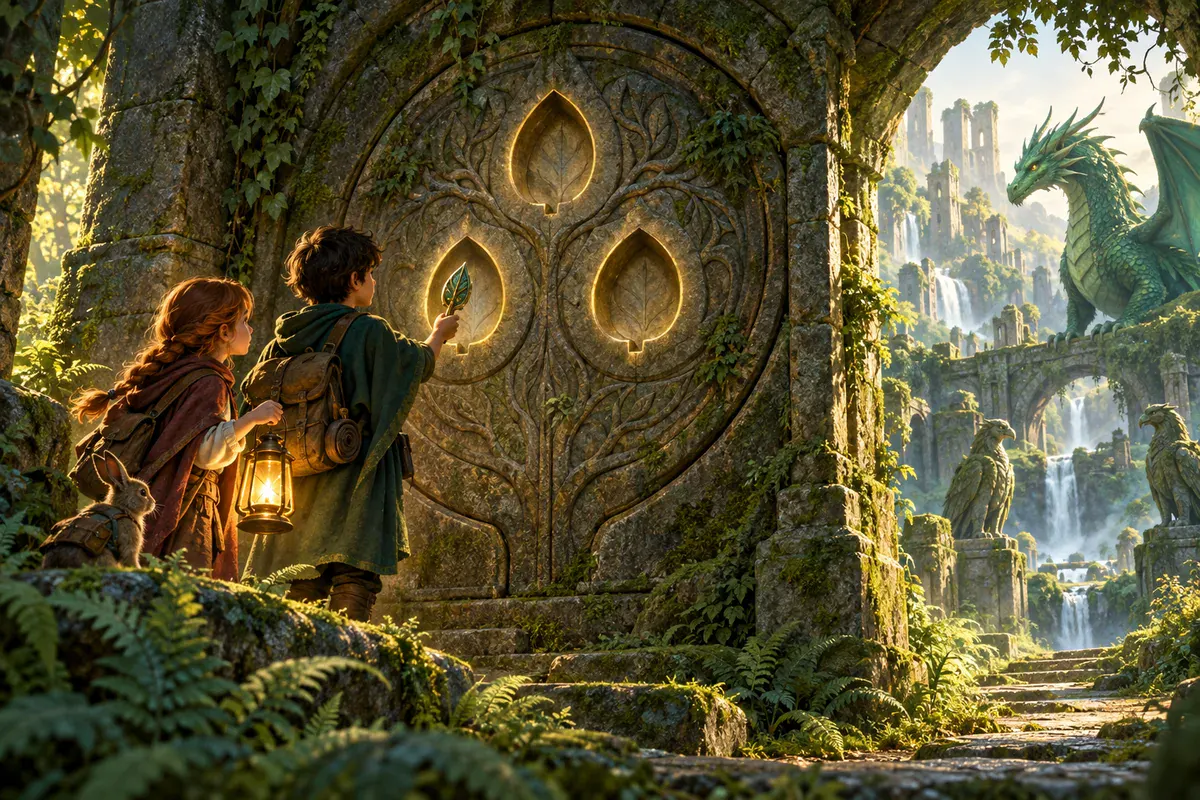
Requires: the cards a card needs first
A card can name the cards that must be found before it opens. Until every one is found, scanning it names what is missing and banks nothing.
At the venue
The board draws a locked card dimmed, with a padlock on its tile and Locked under it. Scan it and the card says which cards it needs, by name. Find them, come back, and it opens.
The rule
- A lock is a list of cards. Every one must be in the team's hand — carried or set down — before the locked card does anything.
- Finding a merchant is a gate on its shelf, so a ware behind a merchant is locked twice: by the merchant and by any lock of its own.
- Gates are read at every scan, never from a cache; the board's picture of them refreshes within a minute.
- This is the only structure a trail has, and it does the work of a plot.
You decide
- Which cards a card requires. One lock on the boss makes a quest; a lock on a merchant's best ware makes an errand.
- How deep to gate. The library's five-year-old story gates three deep and is finished by five-year-olds.
From the library
The demo deck's Tyrannosaurus rex requires the six gallery cards before it.
Opens: the same fact, printed on the key
A card that another card requires prints what it opens, so a prerequisite is never mistaken for ordinary loot.
At the venue
On the card, under its name: what this one opens. A team that pockets the brush knows it is holding a key rather than a trinket, and knows which door it fits.
The rule
- Opens is Requires read backwards, computed from the locks and never typed a second time.
- Without it a player pockets the key, forgets it, and hits a wall twenty minutes later with no idea what they are missing.
You decide
- Nothing — it follows from the locks you set. Name the door well and the key explains itself.
From the library
Each of the demo deck's six galleries says it opens the Tyrannosaurus rex.
A locked card shows a mission, not a wall
Scan a locked card and it names the cards you are missing. It banks nothing, charges nothing, and a locked enemy renders no fight.
At the venue
The quest tracker at the top of the board keeps the boss's line — locked, with what it needs — and the card itself repeats it on a scan. From the board a locked tile keeps its secret: the kind's glyph, no name.
The rule
- The refusal comes before any outcome: no coins, no stats, no game, no purchase.
- The card names its missing cards in the player's own language; the board tile does not, so a locked finale stays a surprise until it is earned.
- A locked ware on a merchant's shelf or on the trail's own stock cannot be bought until its cards are found.
You decide
- The names of the cards in the lock — they are the sentence the locked card speaks.
From the library
The tracker line above reads the demo deck's finale the way a team on the trail reads it.
Follow your finds on the board
The board shows which cards you have collected and which are still waiting.
At the venue
Open the board to check your collection and choose the next card to look for.
The rule
- The position is the deck's order — the order you wrote the cards in, or dragged them into on the workbench.
- Finding a card keeps its place on the board, so you can see your collection grow.
You decide
- The order of the deck. The Start first, the boss last, the middle in the order the venue walks.
From the library
The demo deck runs from The Burrow at Dawn to the Tyrannosaurus rex, its galleries in walking order between them.
The boss ends the quest, not the trail
One card wears the Boss type. Beating it finishes the quest for the team; every card still hidden keeps scanning and keeps scoring.

Enemy stats
 Vitality
4
 Attack
4
 Defense
2
Win reward
 40
Points
 40
Coin reward
Twelve metres long, around eight tonnes, some sixty banana-sized teeth and a bite of roughly 35,000 newtons — enough to crush bone, and fossilised dung packed with shattered bone proves it did. Its eyes faced forward for depth perception and its brain was built around smell. In its teens it gained about two kilograms a day. Sue, the most complete skeleton known, came from Hell Creek and died at around 28 years old. It lived closer in time to you than to Stegosaurus. Survive the King.
The boss of the demo deck, face up — the card that ends the quest.
At the venue
After beating the boss, a team sees a summary of its own score, its coins, the cards it collected and its time played, plus the count of any cards still hidden. The finisher badge lands on the account, and the finishing position is stamped when the race is called or the day clears.
The rule
- The boss is the card whose type is Boss. The playtest fails an RPG story without one and warns about one with two.
- Beating it marks the team complete; on a basic-mode trail, filling the loot bar does the same.
- The cards after the boss still scan and score, so a finisher with seven codes still hidden goes on collecting.
- The richest card in a deck should be the boss — the playtest warns when the finale is not the peak.
You decide
- Which card is the boss, what it requires, and what it is worth.
From the library
The demo deck's boss is its Tyrannosaurus rex, worth more than any gallery card.
A quest key is free to carry and never for sale
A card another card requires is a quest key: it spends no role slot, carries no gear tag, pays its stats in full, and the marketplace refuses it.
At the venue
In the pack, keys sit under their own heading with a note that they cost no slot. On the marketplace the sell form never offers them.
The rule
- A key never spends a slot on a roles trail and can never be set down.
- A key may not carry a gear tag, so it pays every role in full.
- The shelf refuses a key: selling it would re-lock the seller's own quest and hand the buyer a boss they never found the key to.
- The playtest fights the boss with exactly the gear its keys guarantee — so a key that carries a stat is armour the audit counts on.
You decide
- Which cards you put in a lock — each becomes a key with these rules the moment you do.
From the library
The demo deck's six galleries are its keys: held for the quest, costing no slot.
Run one this month.
- Free includes every ready-made story, stories of your own, printable codes and the leaderboard — 20 phones on every board. No card.
- Each phone past the free 20 costs $1 — 1 Gold Egg — charged as its team joins, so nobody pays for an empty seat. 25 phones: $5. The prize is your call: Gold Eggs in the board's pot for its top finishers, or one of your own. A phone is one team, any number of people — and your own phone takes no place.
- Play it again on the same codes: a reset opens a new board with 20 free phones again, every card back in play.
- Your own story is free to write; its pictures are $12 for every 24 cards (12 Gold Eggs), with 3 tries at each. GPS costs nothing extra. Gold Eggs come in packs, 20 for $20, paid once — there is no subscription.