Shush.
There's a dragon in Biography.
Hang QR codes on the shelf ends. A phone's camera opens each one as a card — a riddle only that shelf can answer, a merchant, the dragon. One leaderboard runs all summer.
Your first 5 players are free, no card. Then $1 a player. Buying for a library system? Write to us
- No app to install
- No name or email asked of a child
- Wi-Fi or a signal at every code
- One phone per team
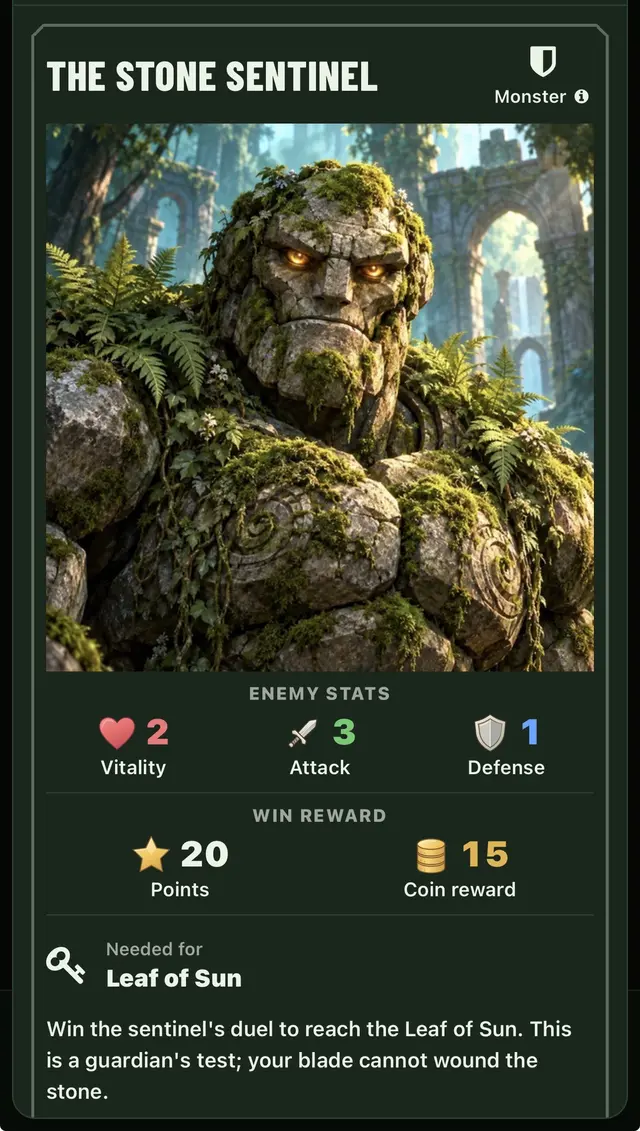
A monster card from a real trail. Beat the sentinel and the Leaf of Sun unlocks — your dragon waits for the sword the same way.
Built for a branch
Hang the label holders once
Next season, print a new story and slide it into the same holders — you change the labels, not the furniture.
The catalog is the puzzle
To answer a shelf's riddle, a team has to pull the book and read it — which is the thing you wanted them doing anyway. The dragon in Biography won't fight a team that hasn't found the sword in Reference.
No library card, no account, no email
A grown-up ticks the terms box and the team plays under a name Eggtrail picks for it. No date of birth, no personal data to consent to, and nothing for your branch to store.
You see the dead codes
A staff page lists every code by when it was last scanned, so a label a toddler peeled off in week two shows up in week two.
Three steps to the first scan
Pick a story, or write one
A ready-made story takes 10 minutes. For riddles about your own shelves, describe the branch to the AI assistant you already use — about 30 minutes, one conversation.
Print and mount
One PDF holds every code and a key to what each one opens. Before you mount a code in a far corner, check that a phone gets a signal there.
Readers scan and play
Teams scan, read and duel their way up the leaderboard. You watch it from the desk.
What librarians ask
Put a story in the stacks
Your first 5 players are free, no card. Then $1 a player. Writing your own story? $1 a card, art included.
Build a trail for free Write to us