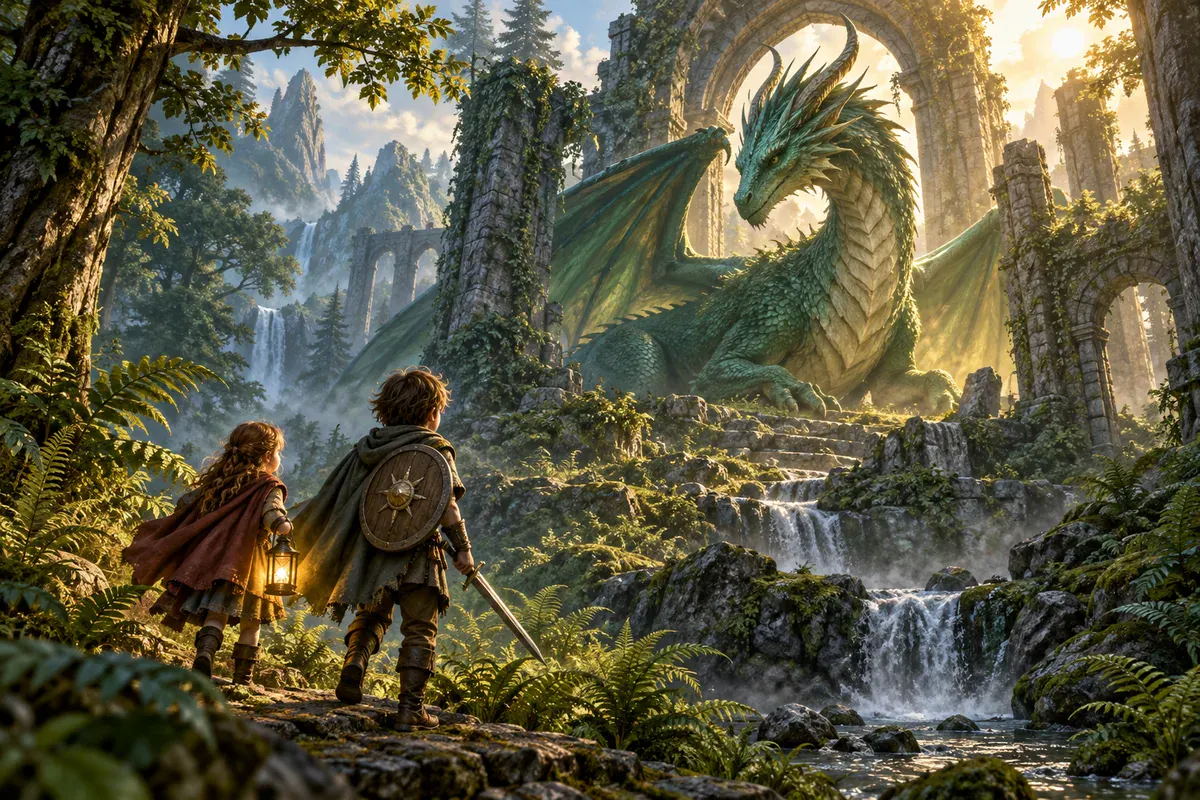
Your venue becomes the game board.
Hide printed QR codes or pin GPS stops on a map. Each one opens a card in the web browser — treasure to bank, a mini-game to win, a boss locked until the team finds the sword. No app. No sign-up to play.
Free — your first 2 trails, 5 teams at a time, no card.
The treasure is on your phone. The adventure is outside it.
- No app
- No sign-up to play
3 trails live now
Teams are out there right now.
Their hosts put them on the map. Find one near you, take a phone with internet to the venue and join there — free to play, no app to install.


RPG mode
Your first encounter.
One stop holds treasure. Another holds this. Try the same duel your players will face on the trail.
Press Fight. Tap the arena when the pointer crosses the gap in the enemy's guard. Land enough hits and you win.
 4
4
 3
3
 2
2
The forest guardian
A practice fight. Nothing is scored or saved, and you can try again.
2
6
3
Lose this fight and it knocks you out — 4 vitality and 8 coins.
Boss is guarding. Strike through the gap!
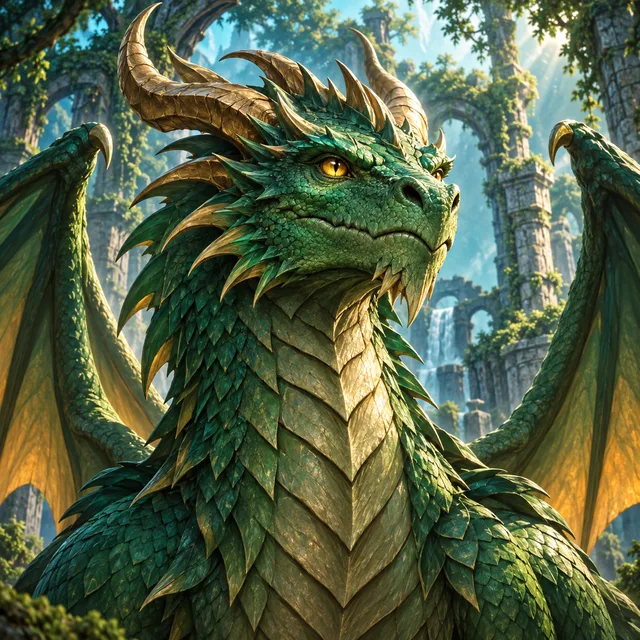
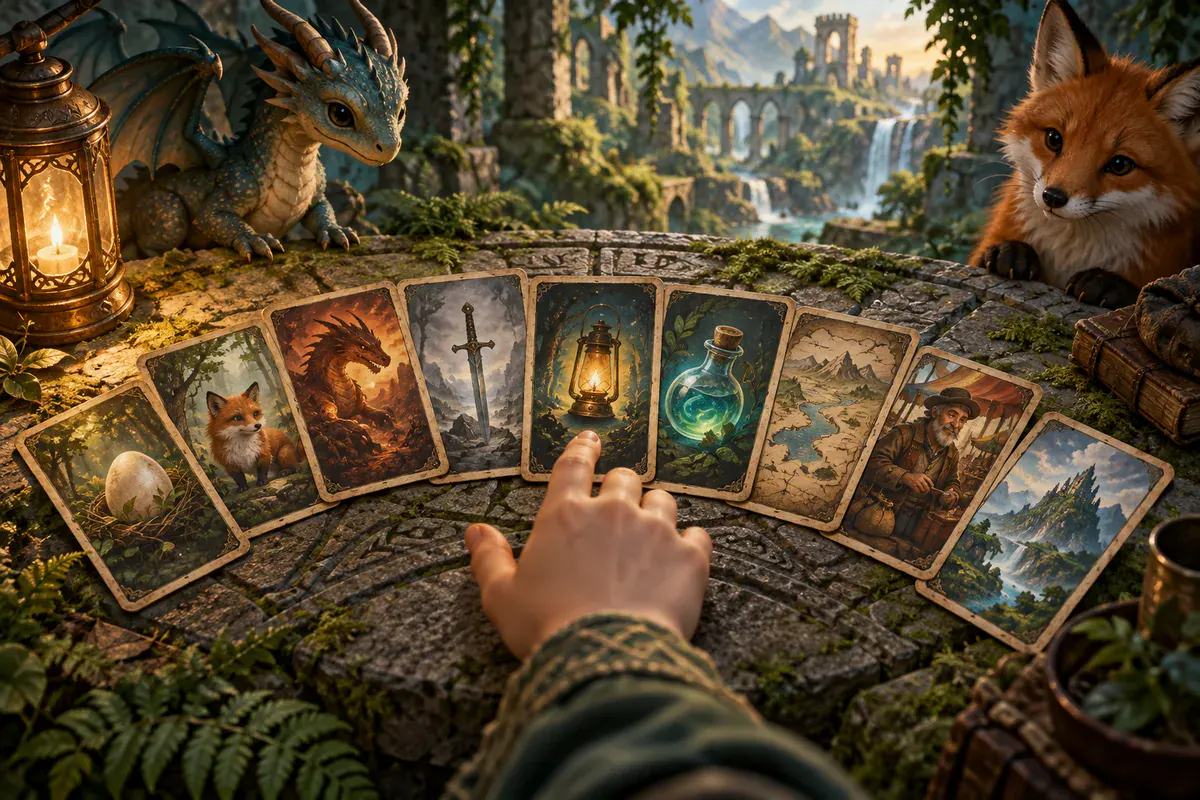
Gear up
Find gear and treasure, then spend your coins at the merchant.
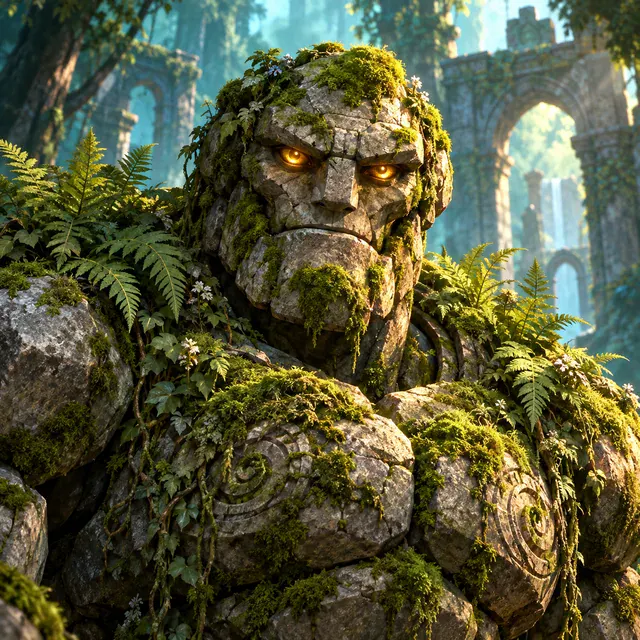
Win the duel
Every enemy starts a duel on your phone. Your gear comes with you.
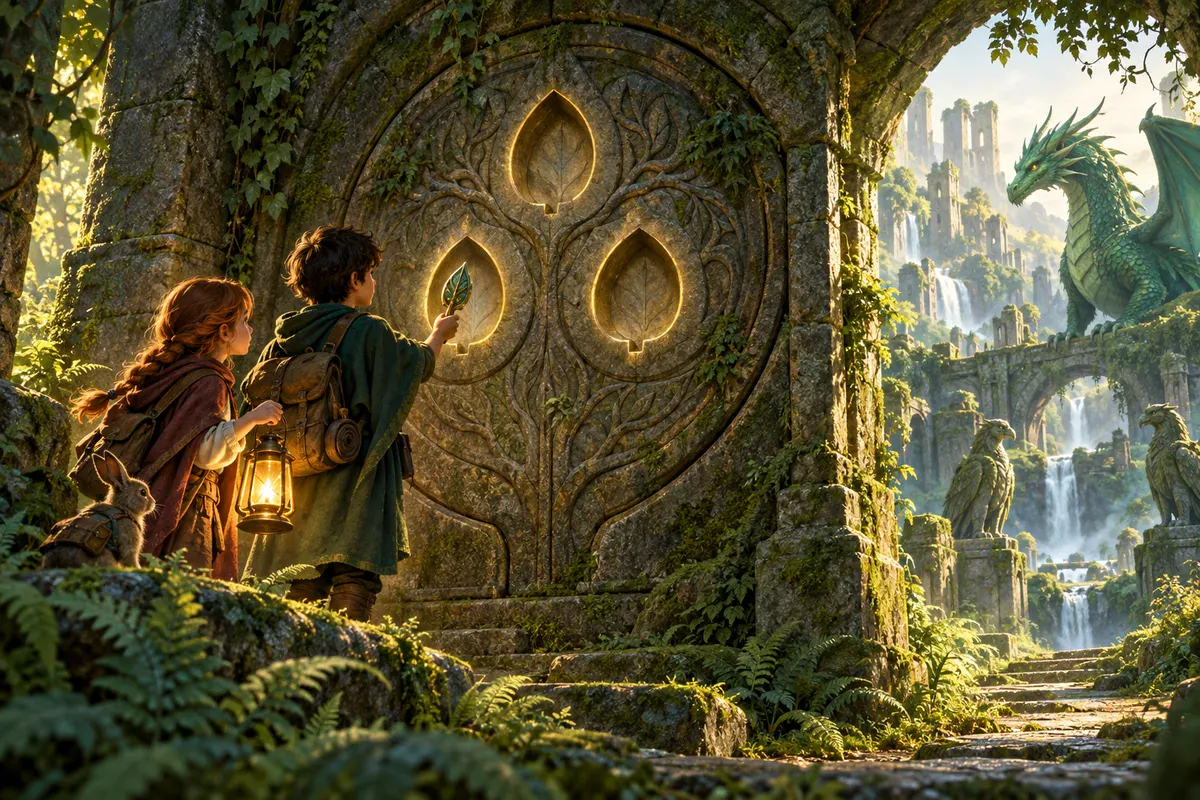
Unlock the boss
The boss stays locked until you hold the right cards. Find them, then fight.
Prefer a straight treasure hunt? Basic mode keeps it to find, collect, and score.
Open the rulebook

Inside a trail
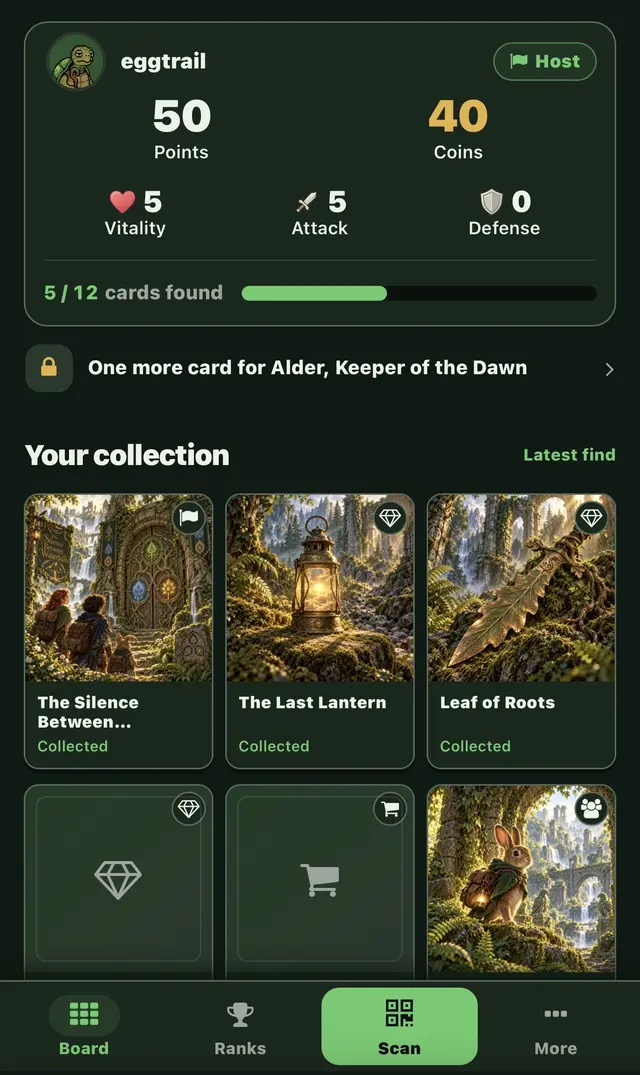
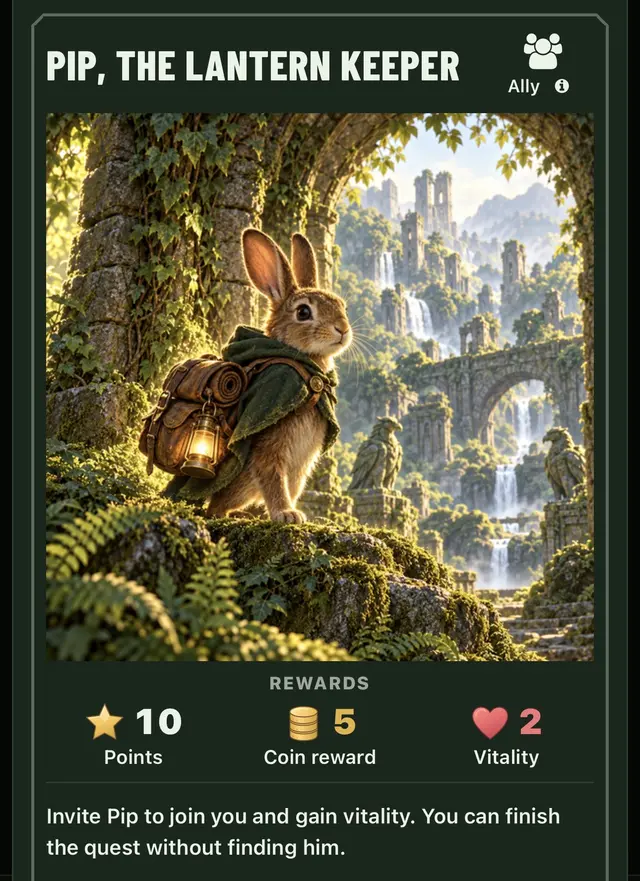
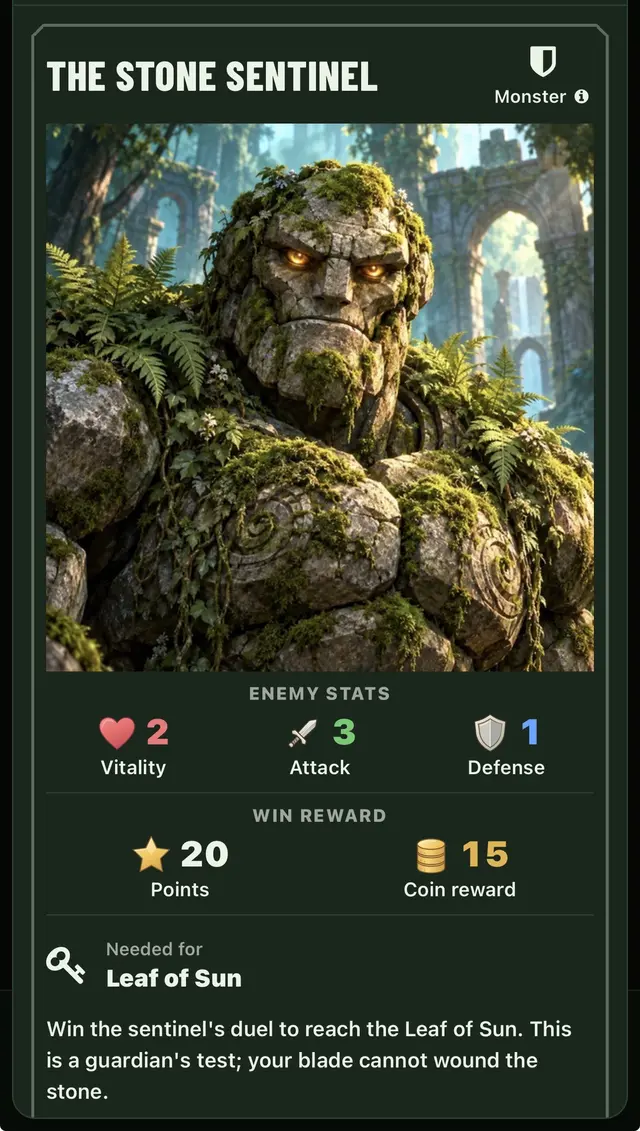
See what opens on your phone
Screenshots from two RPG trails, each in its own story's colours. Scan a code, meet its card and follow your collection on the board.
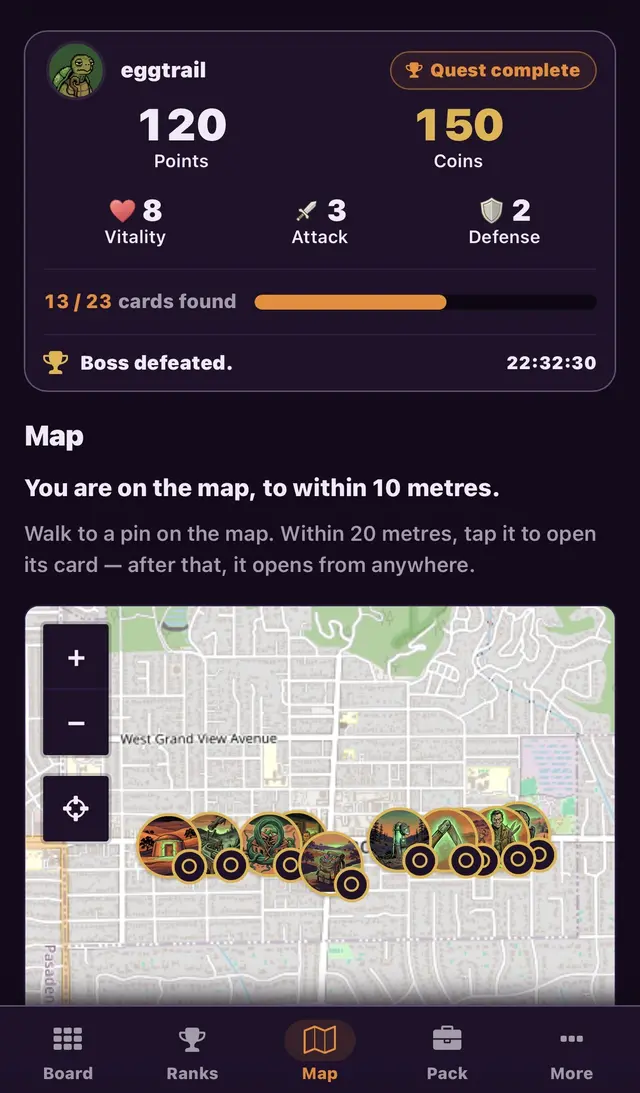
Every place has a story
Where will yours begin?
Run a trail through your galleries, down your paths or around your garden. You pick what players find. Eggtrail keeps the score.
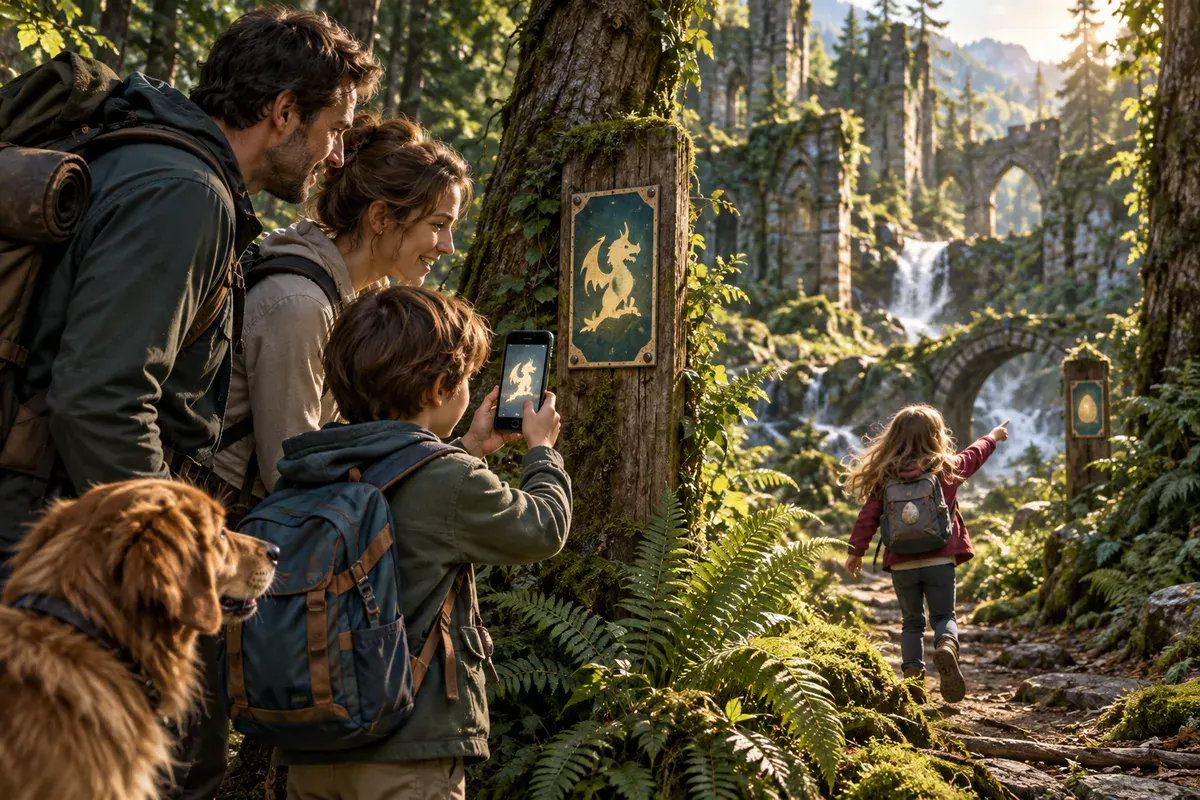
Parks & trails
A quest along the paths you already have.
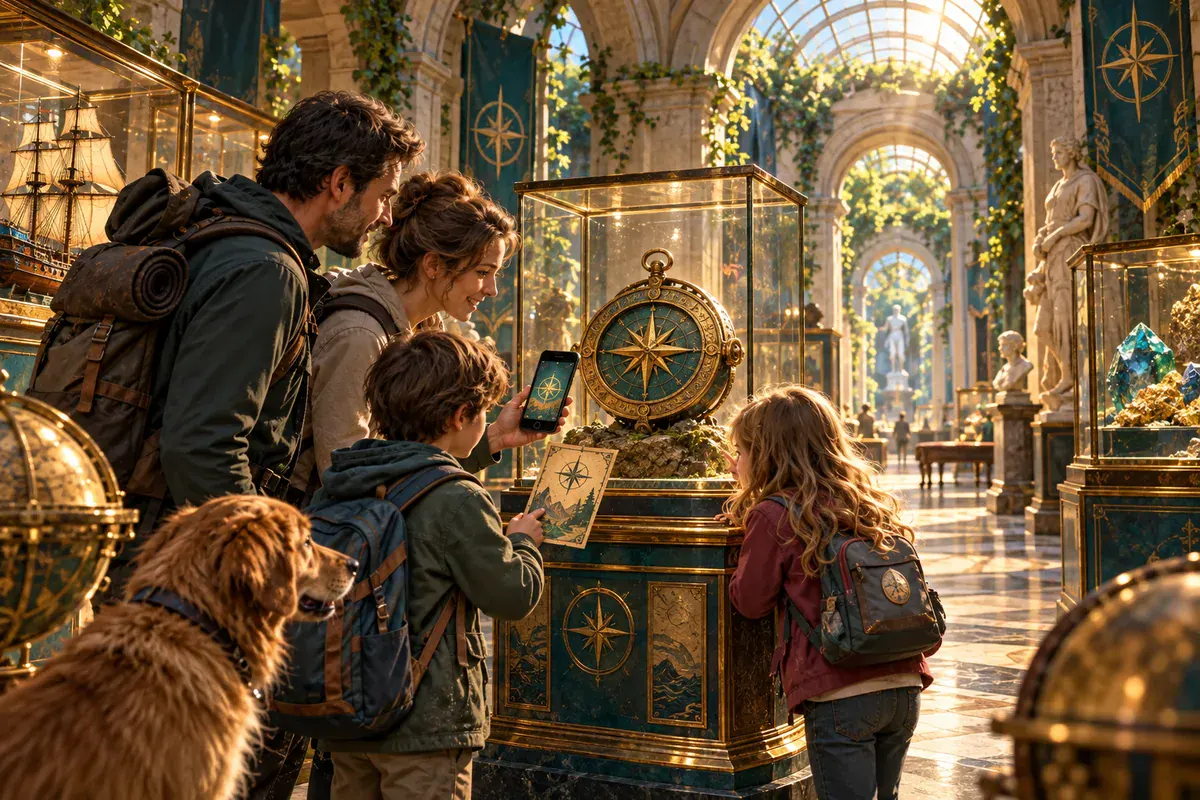
Museums & galleries
Clues in the exhibits. Answers on the plaques.
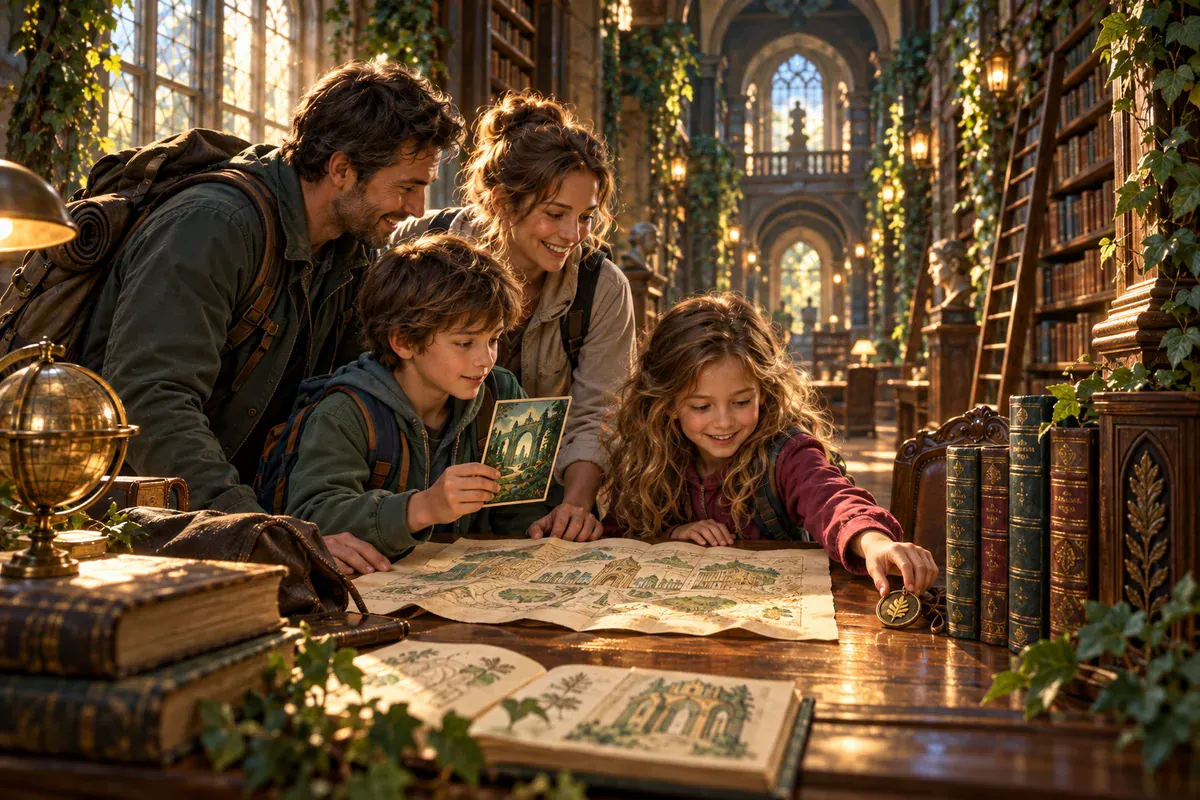
Libraries
A reading quest through the stacks.
Birthday parties & events
The garden becomes a quest. Your guests become the heroes.
Farms & campgrounds A trail from the barn to the campfire.
Explore QR huntsQR hunts & GPS geocaching
Two ways to find the treasure.
Same cards. Same score. You choose how players find them.
Printed QR codes
Hide a code.
Download the QR PDF, print and hide the codes. A camera scan opens the card in the browser. Use a shelf, a plaque or a post — you choose the exact spot.
Indoors or outdoors. Protect paper codes from the weather.
Outdoor GPS stops
Leave no label.
Pin the stops and share the trail link. Players follow the map, reach a stop and check their location to play its card. No printer. No container. No label to replace after rain.
On a GPS trail a monster, a boss, an ally or a runaway animal can also run between spots you pick, on a clock you set. How moving cards work
GPS needs location permission and a usable outdoor position. It comes with any paid plan.
Take the same story to another park, town or country with a new trail. Set its stops and check the route on foot. Both ways to play need internet at every stop.
Find public trails on the mapHow it works
Three steps to your trail
-
01
Choose a story
Pick an adventure from the library — the treasure, questions and monsters are already written. A story of your own comes with a paid plan.
-
02
Place the adventure
Print the QR sheet and hide the codes, or pin each stop on the map. Walk the route once before you start. GPS trails come with a paid plan.
-
03
Find it. Play it.
Share the trail link. Teams scan a code or reach a stop and check their location, and the card opens in the browser. One phone per team, with internet at every stop.
Look inside the setup
A recorded conversation, replayed. No live AI on this page.
- You Our museum has six galleries. Write a quest that leads families through all six.
- Assistant How old are the youngest players? That sets the questions and the difficulty.
- You Families. Kids from about eight.
- Assistant A card in each gallery, clues on the labels, and a final challenge locked until all six are found. Here are the first three cards.


Pick an adventure. Print the codes.
Start with a story from the library. Print its codes and hide them around your space.
4 × 3 in, straight off the sheet. It slides into a vinyl badge holder.
The next chapter
New season. New quest.
A spring quest. A Halloween mystery. A summer reading challenge. Each season is a new trail — print a fresh QR sheet, or pin new GPS stops.
What do I get, and what do I need?
A playable trail on Eggtrail. A QR trail comes with a PDF to print, cut and hide. A GPS trail puts its stops on a map, with nothing to print. Either way: one phone per team and internet at every stop.
What is a QR scavenger hunt?
Codes printed on paper and mounted around your site. A visitor points a phone camera at one and a card opens in the browser — a monster to fight, a question to answer, treasure to bank. Then they go and find the next one. The board keeps score.
Do visitors need an app?
No. They open the trail link or scan a QR code, choose a team name and play in the browser. No email, no sign-up. On a GPS trail, players also allow location access.
How many people can play?
Your plan sets how many teams the board holds at once — on the free plan, 5. Plans with 50 or more daily players clear the board every night on their own: every place free, every card back on the trail. Say you host on Saturday. Your phone takes no place. The first 5 teams join; the next team sees that the trail is full. Reset the board before the next run and every card goes back on the trail, every place is free.
How long does it take to set up?
Ten minutes to pick a ready-made story, print its QR sheet and cut the codes. Hiding them takes as long as your space is big. A GPS trail skips the printer — pin the stops, then walk the route to check each one.
What does it cost?
Free — your first 2 trails, 5 teams at a time, no card. Choose any story in the library. Paid plans cost $1 per daily player per month, and a party pack is paid once. Every paid plan includes GPS trails. A team is one phone, any number of people.
Do we need Wi-Fi?
Mobile data or Wi-Fi at every stop — neither mode works offline. GPS also needs location permission and a usable outdoor position. Walk the route with a phone before you start.
Can we run it in Spanish?
Yes. Trails run in English or Spanish, and the story is written in the language you choose.
Can a card read itself aloud?
Yes, on a story of your own, which comes with a paid plan. One press records every card's description in a synthesized voice — in the story's language, at no cost per card. A player who cannot read yet presses play on the card. Nothing plays by itself, and the story is marked Made with AI.
Your move
The boss is already drawn.
Pick a story. Choose where the treasure lives. A story of your own comes with a paid plan.
Free — your first 2 trails, 5 teams at a time, no card.
What does the free plan include?
- Free includes every ready-made story, printable codes and the leaderboard. No card, and it never expires.
- 2 trail credits, each trail with 5 teams on its board. A team is one phone, any number of people — and your own phone takes no place.
- Building a trail spends one trail credit. Finishing or deleting it does not return the credit. Resetting its board keeps the same trail and frees team places.
- Paid plans add GPS trails, stories of your own, card art you upload and more daily players. Automatic daily resets start at 50 players.